

Increases Energy
The energy within you is rebuilding and restoring your vitality ground up
Most of us reach for energy the way we reach for our phones — reflexively, from the outside. Another coffee, another supplement, another productivity hack. And yet, the most persistent fatigue most people live with isn't a caffeine deficiency. It's a system running inefficiently, draining more than it restores.
Meditation addresses energy not by adding something to an already overloaded system, but by removing what's draining it. And behind that, it actively reconfigures the hormonal and neurological chemistry of vitality. The result, for consistent practitioners, isn't a buzz. It's a deeper, more sustainable alertness that holds through the day — and that research is now beginning to explain in precise biological terms.
The hidden energy drain of chronic stress
Before understanding how meditation builds energy, it helps to understand what depletes it. Chronic stress is perhaps the most underappreciated energy thief in modern life. When cortisol remains persistently elevated, the body operates in a state of background emergency — a physiological cost that never appears on any invoice, but accumulates silently in fatigue, brain fog, disrupted sleep, and eroded motivation.
⚡ What Chronic Stress Silently Costs Your Energy
A study published in the Journal of Psychological Science highlighted that individuals who engaged in regular meditation showed increased brain connectivity in regions responsible for regulating emotion and stress response — specifically, a calming of the amygdala and strengthening of the prefrontal cortex. This neural shift translates directly to less energy wasted on worry, reactivity, and mental noise.
The hormone chemistry of sustained energy
Meditation's most direct pathway to increased energy runs through its effects on the body's hormonal landscape. Three molecules stand out most clearly in the research: cortisol, DHEA, and growth hormone.
CORTISOL
↓ 47%
Average reduction in cortisol levels recorded in meditators across studies, including findings by Dr. Giampapa at the American Board of Anti-Aging Medicine
DHEA
↑ 44%
Average increase in DHEA — the "longevity molecule" that counteracts cortisol and supports cellular vitality — among regular meditators
GABA
↑ 27%
Increase in calming neurotransmitter GABA following meditation, reducing anxiety-driven energy drain and promoting restorative nervous system states
Sources: Dr. Vincent Giampapa MD, American Board of Anti-Aging Medicine; Boston University School of Medicine (GABA study); Mindfulness-Based Stress Reduction research, MBSR group comparisons
DHEA deserves particular attention in the energy story. Often called the "longevity molecule" by researchers, DHEA is a precursor to virtually every other hormone the body produces — including testosterone and oestrogen — and acts as a direct counter to cortisol. When DHEA is high, the body is resilient, energised, and able to regulate stress. When it's low — as it progressively becomes from our thirties onward, or under chronic stress — fatigue, loss of motivation, and cellular vulnerability follow.
Mindfulness-Based Stress Reduction (MBSR) research has found statistically significant higher DHEA levels in participants compared to waiting-list controls, alongside better subjective scores on wellbeing and resilience. The implication is not merely biochemical — it is felt, measurably, as greater daily vitality.
Systematic Review — ScienceDirect, 2024
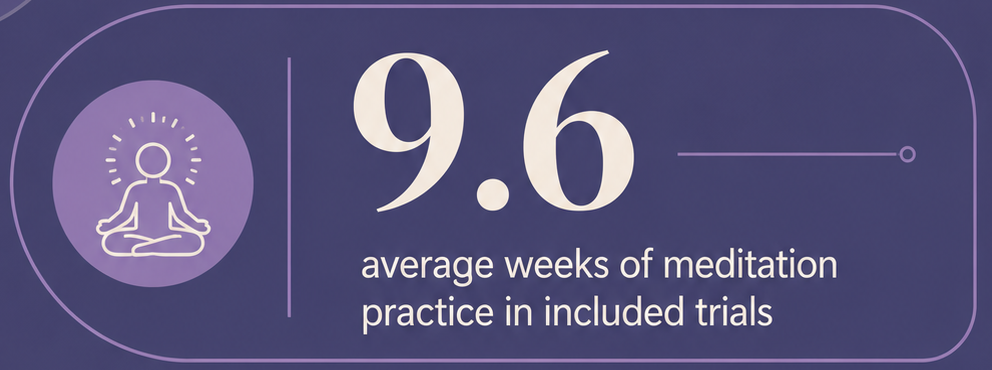
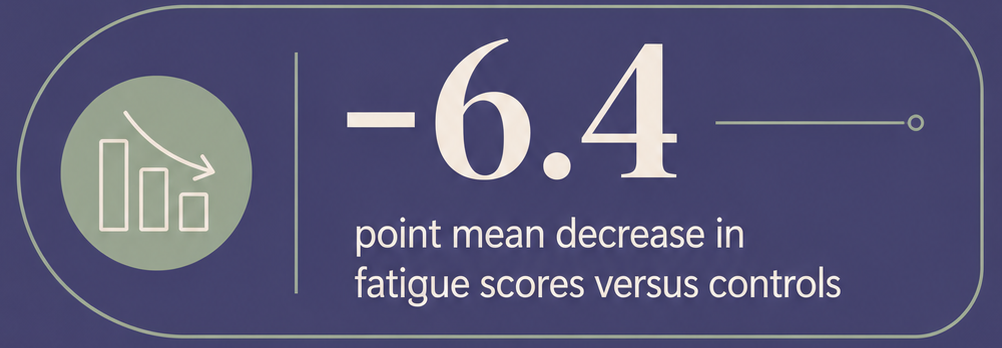
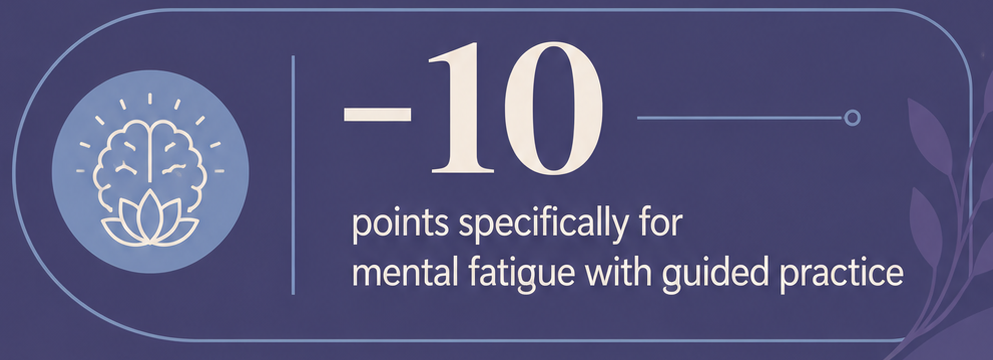
A comprehensive systematic review and meta-analysis published in ScienceDirect in 2024 analysed 29 randomised controlled trials covering 4,104 participants across multiple populations — including cancer patients, those with fibromyalgia, multiple sclerosis, Parkinson's disease, sub-healthy individuals, and general subjects.
🔬 Cancer Patients & Fatigue Reduction
One of the most striking individual findings comes from a randomised controlled trial with cancer patients: eight weeks of mindfulness meditation reduced self-reported fatigue by nearly 30%. A separate study on shift workers found that breath-focused meditation lowered daytime tiredness by enhancing parasympathetic nervous system activity.These clinical contexts matter because they represent fatigue at its most extreme and treatment-resistant. If meditation moves the needle here, its effects in otherwise healthy but chronically depleted individuals are likely substantial.
Growth hormone, vitality, and the delta state
During deep meditation, the brain enters slower brainwave states — alpha and theta — that share characteristics with deep sleep. These states trigger the pituitary gland to release growth hormone, a key driver of cellular repair, muscle maintenance, metabolic efficiency, and sustained physical energy. Yoga and meditation research, including studies from India on combined yogic practices, found that these disciplines significantly increase basal growth hormone and DHEA levels, "contributing to promoting healthy ageing" and sustained vitality.
For most adults, growth hormone production declines steadily from around age 30 — contributing to the fatigue, body composition changes, and recovery difficulties associated with middle age. Meditation, by triggering the same deep-rest neurological states in which growth hormone is naturally released, offers a non-pharmacological path to maintaining more youthful endocrine function.
There's a particular irony in the modern pursuit of energy: we exhaust ourselves looking for it in stimulants, in optimisation routines, in ever-more-efficient schedules. Meditation suggests a different direction entirely — not outward to add more, but inward to stop losing what we already have. The cortisol drops. The DHEA rises. The brain shifts from emergency mode to something quieter, more efficient, more alive.What practitioners often describe as "a different quality of energy after meditating" is not placebo. It has a chemistry. It has a name. And it has been waiting inside you, accessible any time you choose to sit still.

Leave a Reply